

Do you wake up with a stiff neck, sore shoulders, or feel like your pillow simply isn’t supporting you properly? The best pillow for neck pain usually keeps your head, neck, and spine in a natural position while matching your sleeping style. For shoulder discomfort, the right pillow should also provide enough height to prevent your head from dropping toward the mattress, especially when you sleep on your side.
There is no single pillow that works for everyone. Your sleeping position, shoulder width, mattress firmness, pillow height, and preferred feel all play a role.
Why Your Pillow Can Affect Neck and Shoulder Discomfort
Your neck should remain reasonably aligned with the rest of your spine while you sleep. A pillow that is too high can push your head forward or sideways, while one that is too low may allow your neck to bend in the opposite direction.
Mayo Clinic recommends supporting the neck so that it stays aligned with the chest and back. Cleveland Clinic also advises choosing a neck pillow height that keeps the head in a neutral position rather than tilted upward or downward.
This is particularly important for people who spend long hours using laptops, smartphones, or working at desks. Poor daytime posture can already place stress on the neck and upper back, and an unsuitable sleeping position may add to that strain.
What Type of Pillow is Better for Neck Pain?
For many people, a memory foam contour or cervical pillow can be a practical option because these designs are intended to support the space between the head, neck, and mattress.
Instead of choosing a pillow only because it feels soft, look at four factors:
- Height: Your head should not be pushed noticeably upward or allowed to sink too low.
- Shape: Contoured or cervical designs can provide more structured neck support.
- Material: Memory foam can adapt to the shape of the head and neck.
- Sleeping position: Side and back sleepers often need different levels of pillow height.
The best pillow for neck pain should feel supportive without forcing your neck into an unnatural position.
Cervical Pillows for More Targeted Neck Support
A cervical pillow has a shaped surface designed around the natural curve of the neck. It may suit people who dislike flat pillows or regularly wake with stiffness around the neck and upper shoulders.
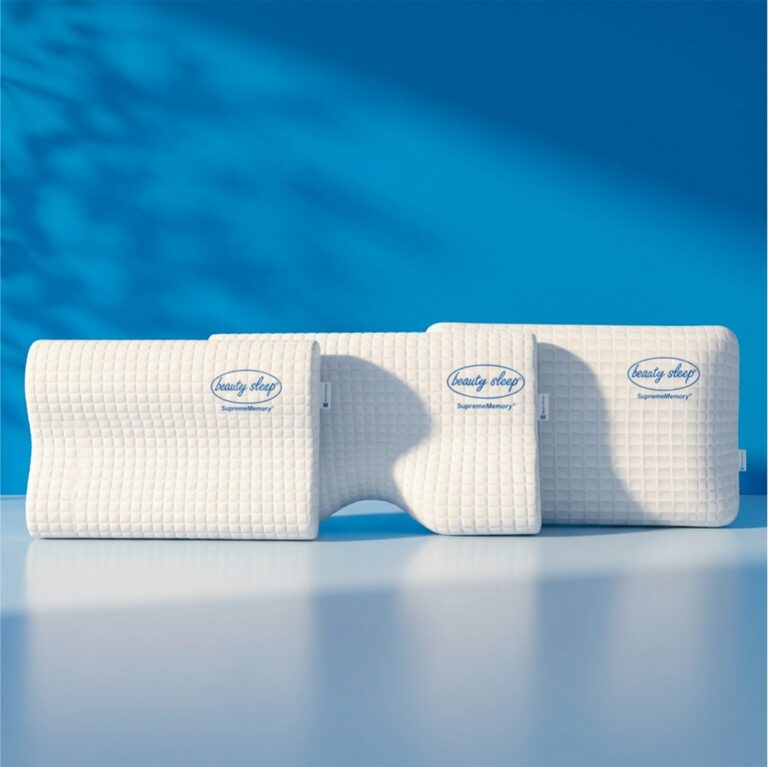
For example, the Supreme Memory Cervical Pillow uses a curved design and memory foam that adapts around the head and neck. Diamond Foam lists it as suitable for both back and side sleepers.
The important point is not simply choosing a “cervical” label. The pillow still needs to match your body size and sleeping position.
Contour Pillows for Adjustable Sleeping Positions
Contour pillows usually have raised and lowered sections instead of one flat surface. This gives the neck a defined area of support.
The Supreme Memory Contour Pillow, for example, has a wave-shaped design with a higher and lower edge. This gives sleepers two height options, which can be useful if you are unsure which pillow height feels more natural. Its memory foam construction and shaped profile are designed for side and back sleeping.
A dual-height design can also be helpful when changing between sleeping positions during the night.
What is the Best Pillow for Shoulder Pain?
Shoulder discomfort often requires looking at both your pillow and your sleeping position.
For side sleepers, the pillow needs to fill the space created by the shoulder between the head and mattress. If the pillow is too thin, the head may tilt downward. If it is excessively thick, the neck may bend upward.
Cleveland Clinic recommends keeping the head in a neutral position when sleeping on your side and avoiding a pillow height that pushes the jaw too far toward the chest or ceiling.
If one shoulder already feels sensitive, avoid spending the entire night directly on that side when possible. A pillow that properly supports your neck may improve your overall sleeping posture, but persistent shoulder pain should not be treated as a pillow problem alone.
Choosing a Pillow Based on Your Sleeping Position
If You Sleep on Your Side
Side sleepers generally need more pillow height because of the gap between the shoulder and the head.
Look for:
- Medium to higher loft
- Stable neck support
- A contour that fills the neck-to-mattress gap
- Material that does not collapse too easily overnight
People with broader shoulders may require slightly more height than people with narrower shoulders.
If You Sleep on Your Back
Back sleepers typically need enough support to maintain the natural curve of the neck without pushing the head too far forward.
A cervical or contour design can work well because the raised neck area provides support while allowing the head to rest slightly lower.
If You Sleep on Your Stomach
Stomach sleeping requires the head to remain turned for long periods and can place additional stress on the neck. Both Mayo Clinic and Cleveland Clinic note that stomach sleeping can be difficult for spinal and neck positioning.
If you cannot change the position, a thinner pillow may reduce how far your neck is raised.
Memory Foam vs Traditional Fiber Pillows
Memory foam is often considered when neck support is the priority because it responds to pressure and maintains a more structured shape.
A traditional ball fiber pillow may feel softer and easier to reshape, but it can flatten during the night depending on its filling and construction.
Neither material is automatically better. Someone who prefers a soft, adjustable pillow may enjoy fiber, while a person looking for more defined neck support may prefer memory foam.
For Pakistani households, breathability is also worth considering because warmer sleeping conditions are common for much of the year. A breathable pillow cover can make a structured memory foam pillow more pleasant to use.
How Each Neck Support Pillow Differs
Diamond Supreme Foam currently offers several shaped memory foam options for people who prefer more structured support.
The Supreme Memory Cervical Pillow focuses on a curved shape designed around the neck, while the Supreme Memory Contour Pillow provides a dual-height wave profile.
Another option is the Dolce Vita Neck Posture Pillow, which uses anatomical contouring and a firmer structure intended to provide more defined cervical support.
Rather than choosing between them based only on price or appearance, consider whether you prefer a curved cervical shape, two selectable contour heights, or a firmer posture-focused design.
A Simple Checklist Before Buying a Neck Pillow in Pakistan
Before ordering a new pillow, ask yourself:
- Do I mostly sleep on my side, back, or stomach?
- Does my current pillow push my head upward or allow it to drop?
- Do I prefer a soft pillow or structured support?
- Are my shoulders broad enough to require additional pillow height?
- Does the pillow have a breathable or removable cover?
- Can I confirm its shape and dimensions before buying?
- Is my discomfort mainly present after sleeping, or does it continue throughout the day?
The last question is important. A pillow may help improve sleeping posture, but ongoing neck or shoulder pain can have many causes.
Finding the best pillow for shoulder pain or neck stiffness is less about choosing the thickest or firmest option and more about achieving natural alignment.
Frequently Asked Questions
What pillow is best for neck pain in Pakistan?
A cervical or contour memory foam pillow can be a useful choice for side and back sleepers because it provides more structured support than a traditional flat pillow. The correct height is just as important as the pillow material.
Is memory foam good for neck and shoulder pain?
Memory foam can work well for people who prefer a pillow that adapts around the head and neck. However, the pillow must still have a suitable height and shape for your sleeping position.
Should side sleepers use a higher pillow?
Usually, side sleepers need enough height to fill the space between the shoulder and head. The goal is to keep the neck aligned rather than tilted toward or away from the mattress.
What is the difference between a cervical pillow and a contour pillow?
A cervical pillow is shaped specifically around the curve of the neck. A contour pillow normally has raised and lowered sections that create different support zones or height options.
When should I see a doctor for neck or shoulder pain?
Seek medical advice if pain is persistent, severe, follows an injury, or is accompanied by symptoms such as numbness, tingling, weakness, or pain traveling into the arm. Neck pain can have causes that require more than changing your pillow.